 Behaviour
Young person develops a positive sense of identity (Youth Justice Support)
The young person develops a positive self-image, sees a future for themselves beyond offending, and experiences growing hope and pride in their progress.
Because desistance is more than a reoffending rate
The Voluntary Sector Youth Justice Support Impact Toolkit provides a complete measurement framework for charities working with children and young people at risk of entering the justice system, currently involved in it, or leaving custody. Designed for organisations providing mentoring, advocacy, keywork, and wrap-around support alongside statutory Youth Offending Teams.

Track every intervention and advocacy action you deliver
Advocacy Actions TakenKnow who you are working with and what they are carrying
Mentoring Sessions DeliveredEvidence early change in trust, safety and the first sparks of hope
Trusts Their Mentor / KeyworkerTrack the identity shift at the heart of desistance
Positive Self-ImageSustain the evidence of lasting change long after support ends
Sustained EET at 6 MonthsYouth Justice Support Impact Framework: A five-stage logic model from mentoring activity through identity change to sustained desistance and independent futures. Built on Desistance Theory. + Use this impact framework





No results in this timeframe
No results in this timeframe
No results in this timeframe
No results in this timeframe
No results in this timeframe
| Progress Tracker | Outcome | Stage | Progress | Target | Percentage |
|---|---|---|---|---|---|
| Advocacy Actions Taken | Activities | 7 | 25 | 28% | |
| Group Sessions Delivered | Activities | 26 | 100 | 26% | |
| Crisis Contacts | Activities | 96 | 100 | 96% | |
| Mentoring Sessions Delivered | Engagement | 17 | 25 | 68% | |
| Engagement Quality | Young person is engaged and has a trusted relationship (Youth Justice Support) | Ability (short-term outcomes) | 7 | 10 | 70% |
| Trust in Keyworker | Young person is engaged and has a trusted relationship (Youth Justice Support) | Ability (short-term outcomes) | 11 | 20 | 55% |
| Feels Listened To | Young person is engaged and has a trusted relationship (Youth Justice Support) | Ability (short-term outcomes) | 21 | 50 | 42% |
| Feels Safe | Young person's immediate safety and stability improves (Youth Justice Support) | Ability (short-term outcomes) | 40 | 50 | 80% |
| Immediate Risk Level | Young person's immediate safety and stability improves (Youth Justice Support) | Ability (short-term outcomes) | 4 | 25 | 16% |
| Serious Incidents | Young person's immediate safety and stability improves (Youth Justice Support) | Ability (short-term outcomes) | 47 | 100 | 47% |
| Thinking About the Future | Young person begins to reflect on their situation and future (Youth Justice Support) | Ability (short-term outcomes) | 61 | 80 | 76% |
| Believes Things Can Change | Young person begins to reflect on their situation and future (Youth Justice Support) | Ability (short-term outcomes) | 10 | 10 | 100% |
| Recognises Impact of Offending | Young person begins to reflect on their situation and future (Youth Justice Support) | Ability (short-term outcomes) | 23 | 40 | 57% |
| Motivation to Change | Young person begins to reflect on their situation and future (Youth Justice Support) | Ability (short-term outcomes) | 1 | 10 | 10% |
| Benefits / Income in Place | Practical barriers begin to be addressed (Youth Justice Support) | Ability (short-term outcomes) | 7 | 100 | 7% |
| Registered with GP | Practical barriers begin to be addressed (Youth Justice Support) | Ability (short-term outcomes) | 16 | 20 | 80% |
| ID Documents in Place | Practical barriers begin to be addressed (Youth Justice Support) | Ability (short-term outcomes) | 15 | 20 | 75% |
| Legal Issues Being Addressed | Practical barriers begin to be addressed (Youth Justice Support) | Ability (short-term outcomes) | 32 | 50 | 64% |
| Positive Self-Image | Young person develops a positive sense of identity (Youth Justice Support) | Behaviour (mid-term outcomes) | 6 | 20 | 30% |
| Sees a Future for Themselves | Young person develops a positive sense of identity (Youth Justice Support) | Behaviour (mid-term outcomes) | 2 | 10 | 20% |
| Feels Proud of Progress Made | Young person develops a positive sense of identity (Youth Justice Support) | Behaviour (mid-term outcomes) | 5 | 20 | 25% |
| Identity Beyond Offending | Young person develops a positive sense of identity (Youth Justice Support) | Behaviour (mid-term outcomes) | 16 | 20 | 80% |
| Hope for the Future | Young person develops a positive sense of identity (Youth Justice Support) | Behaviour (mid-term outcomes) | 2 | 10 | 20% |
| Has Positive People in Their Life | Young person builds positive relationships and support networks (Youth Justice Support) | Behaviour (mid-term outcomes) | 16 | 40 | 40% |
| Negative Peer Exposure | Young person builds positive relationships and support networks (Youth Justice Support) | Behaviour (mid-term outcomes) | 69 | 100 | 69% |
| Family Relationships | Young person builds positive relationships and support networks (Youth Justice Support) | Behaviour (mid-term outcomes) | 95 | 100 | 95% |
| Has Someone to Turn to in Crisis | Young person builds positive relationships and support networks (Youth Justice Support) | Behaviour (mid-term outcomes) | 14 | 50 | 28% |
| Engagement in EET | Young person re-engages with education, employment, or training (Youth Justice Support) | Behaviour (mid-term outcomes) | 7 | 10 | 70% |
| Progress Towards EET | Young person re-engages with education, employment, or training (Youth Justice Support) | Behaviour (mid-term outcomes) | 1 | 25 | 4% |
| Overall Wellbeing | Young person's mental health and wellbeing improves (Youth Justice Support) | Behaviour (mid-term outcomes) | 4 | 20 | 20% |
| Managing Emotions | Young person's mental health and wellbeing improves (Youth Justice Support) | Behaviour (mid-term outcomes) | 9 | 25 | 36% |
| Substance Use Management | Young person's mental health and wellbeing improves (Youth Justice Support) | Behaviour (mid-term outcomes) | 3 | 50 | 6% |
| Mental Health Being Supported | Young person's mental health and wellbeing improves (Youth Justice Support) | Behaviour (mid-term outcomes) | 86 | 100 | 86% |
| Self-Reported Offending Frequency | Young person stops or significantly reduces offending (Youth Justice Support) | Effect (long-term outcomes) | 72 | 80 | 90% |
| Proven Reoffending | Young person stops or significantly reduces offending (Youth Justice Support) | Effect (long-term outcomes) | 3 | 40 | 7% |
| Arrest-Free Period | Young person stops or significantly reduces offending (Youth Justice Support) | Effect (long-term outcomes) | 6 | 20 | 30% |
| Custodial Sentence Avoided | Young person stops or significantly reduces offending (Youth Justice Support) | Effect (long-term outcomes) | 17 | 40 | 42% |
| Feels in Control of Own Life | Young person sustains a positive sense of identity and direction (Youth Justice Support) | Effect (long-term outcomes) | 4 | 10 | 40% |
| Sense of Purpose and Direction | Young person sustains a positive sense of identity and direction (Youth Justice Support) | Effect (long-term outcomes) | 4 | 25 | 16% |
| Sustained in EET at 6 Months | Young person sustains positive progression (Youth Justice Support) | Effect (long-term outcomes) | 12 | 80 | 15% |
| Sustained in EET at 12 Months | Young person sustains positive progression (Youth Justice Support) | Effect (long-term outcomes) | 14 | 20 | 70% |
| Stable Housing Sustained | Young person sustains positive progression (Youth Justice Support) | Effect (long-term outcomes) | 3 | 10 | 30% |
| Overall Support Rating | Young person no longer needs intensive support (Youth Justice Support) | Effect (long-term outcomes) | 17 | 25 | 68% |
| Planned Step-Down | Young person no longer needs intensive support (Youth Justice Support) | Effect (long-term outcomes) | 31 | 50 | 62% |
| Self-Managing | Young person no longer needs intensive support (Youth Justice Support) | Effect (long-term outcomes) | 4 | 10 | 40% |
| Would Re-Access Support If Needed | Young person no longer needs intensive support (Youth Justice Support) | Effect (long-term outcomes) | 44 | 80 | 55% |
Get started with surveys written for this kind of work. Use the ready-made version, adapt it if you want or write your own surveys from scratch.
Establishes baseline across safety, motivation, identity, wellbeing and relationships within the first four weeks of engagement.
+ Use this surveyThree-monthly review covering all baseline indicators plus EET status, skills development and offending. Use Distance Travelled to show young people how far they have come.
+ Use this surveyEnd-of-support assessment capturing final outcomes, justice data, EET status, exit type and the young person's own reflections.
+ Use this surveyInformal check-in six months after support ends, relational, not clinical. Tracks sustained desistance, EET, housing and key identity indicators.
+ Use this surveyLong-term follow-up twelve months after support ends. Tracks sustained desistance, life trajectory and long-term identity indicators.
+ Use this surveyWith Makerble® it’s easier than ever to gather all the insights you need to change lives, drive growth and spark transformation.
Whether you survey once or at regular intervals, you can easily compare trends, spot changes and measure longitudinal impact across individuals or groups.
Set rules that trigger surveys automatically - when someone joins a programme, attends an event or reaches a key milestone. Initiate follow-ups, send reminders and personalise survey journeys to keep participants involved throughout.
Bring your survey history with you. Makerble lets you upload legacy data from spreadsheets or other platforms - and even link it to individual profiles in your CRM. That means no disruption, just continuity and deeper insight.
Use tablets and smartphones to record survey responses even without an internet connection - all results sync to the cloud automatically whenever you have an internet connection.
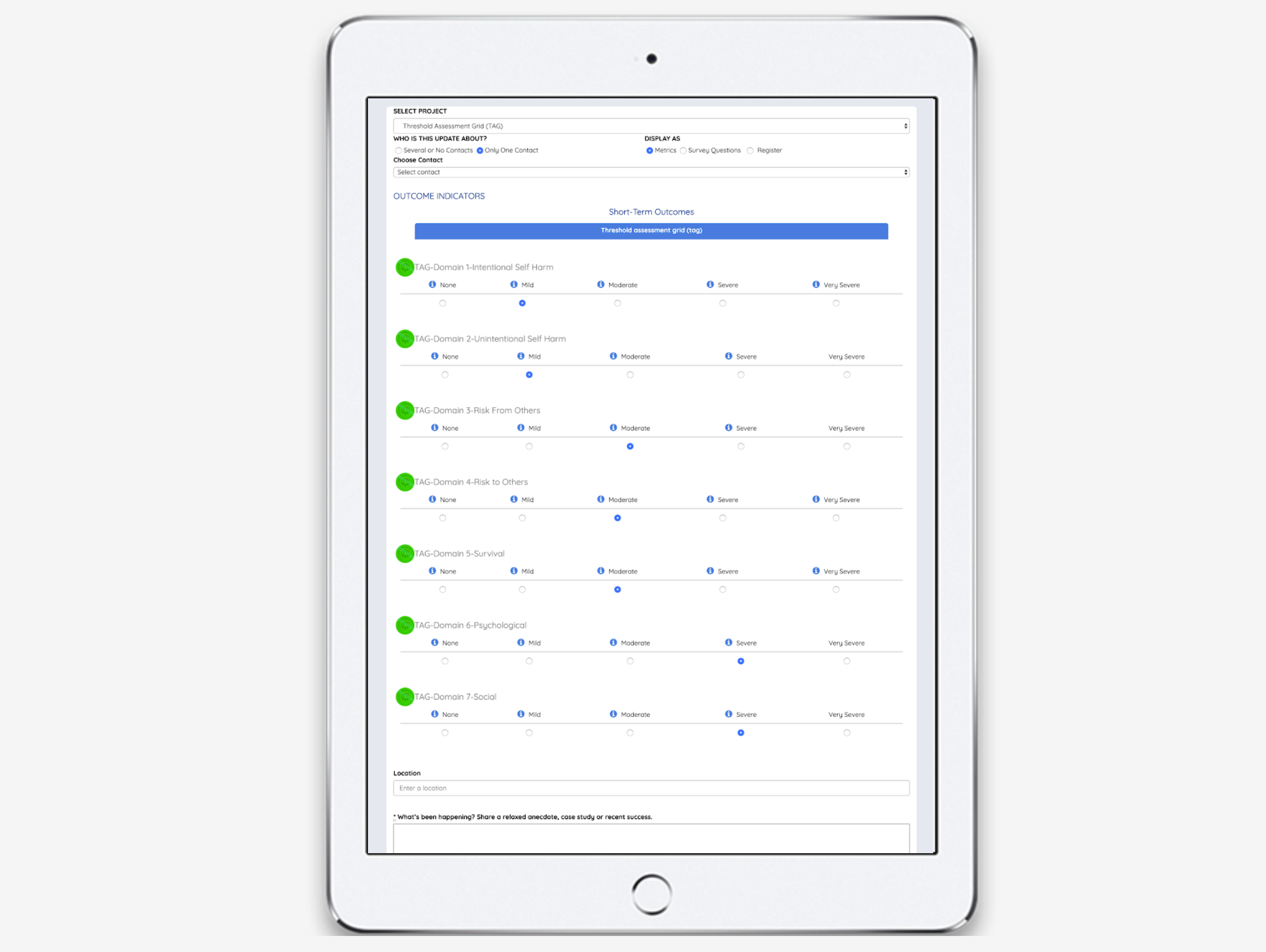
Collect all the information you need to know about every individual you work with
and 18 more questions
Keep things running smoothly with powerful CRM tools that are surprisingly easy to use
Each contact’s profile contains a full history: emails, texts, notes, progress, survey responses and more. No more asking around. Everyone sees the same picture. And yes, you can export it all to PDF for case reviews and multi-agency meetings.
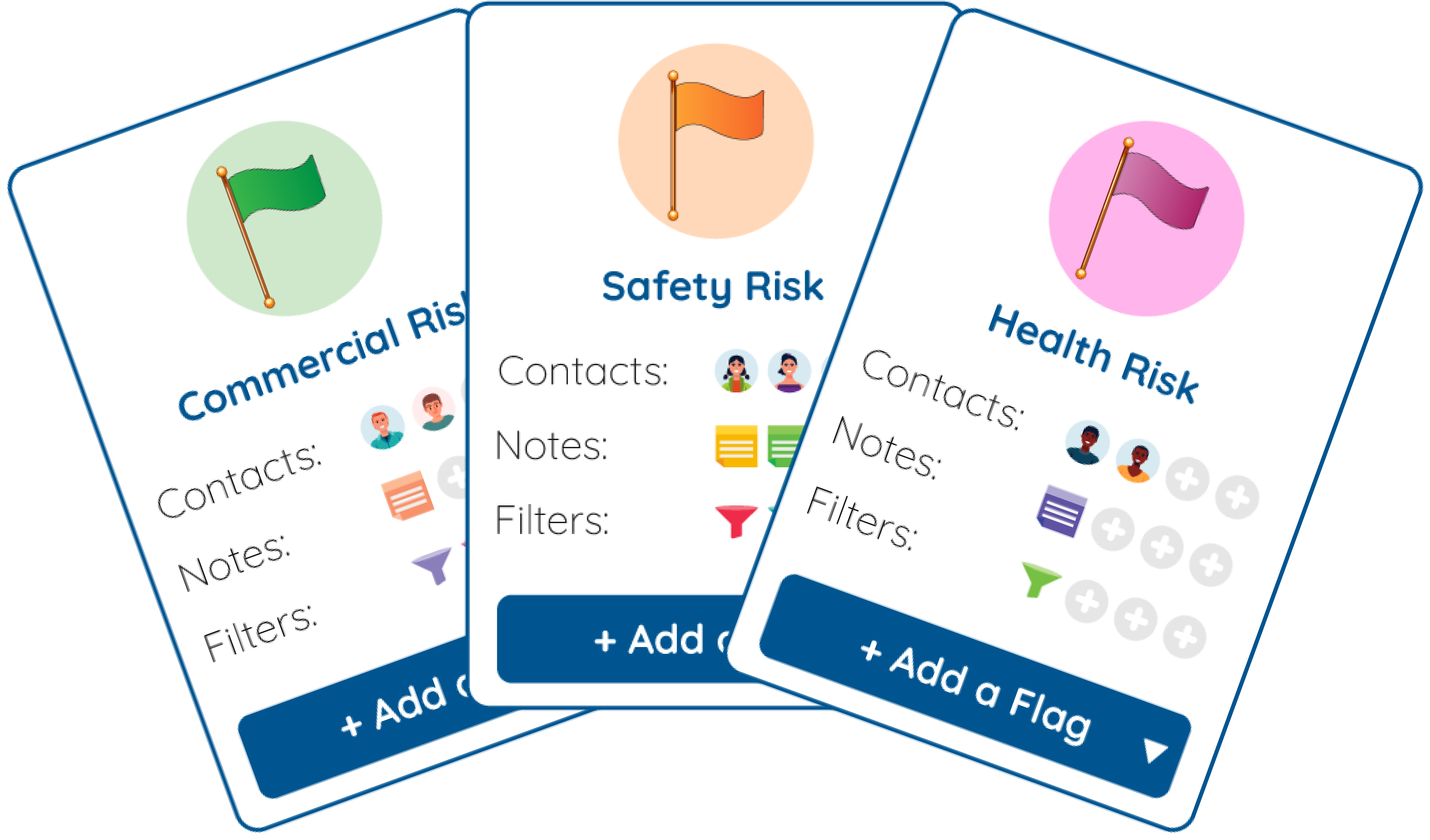
Use visual flags to highlight important information - such as allergies, risks or support needs. Flags follow people across the system, giving your team the heads-up they need at the moment they need it. Report on flags, filter by flags, automate flags.
Create branded forms for signups, referrals and newsletters - then embed them on your website or use them internally. Responses are instantly turned into CRM records, saving your team hours of admin.
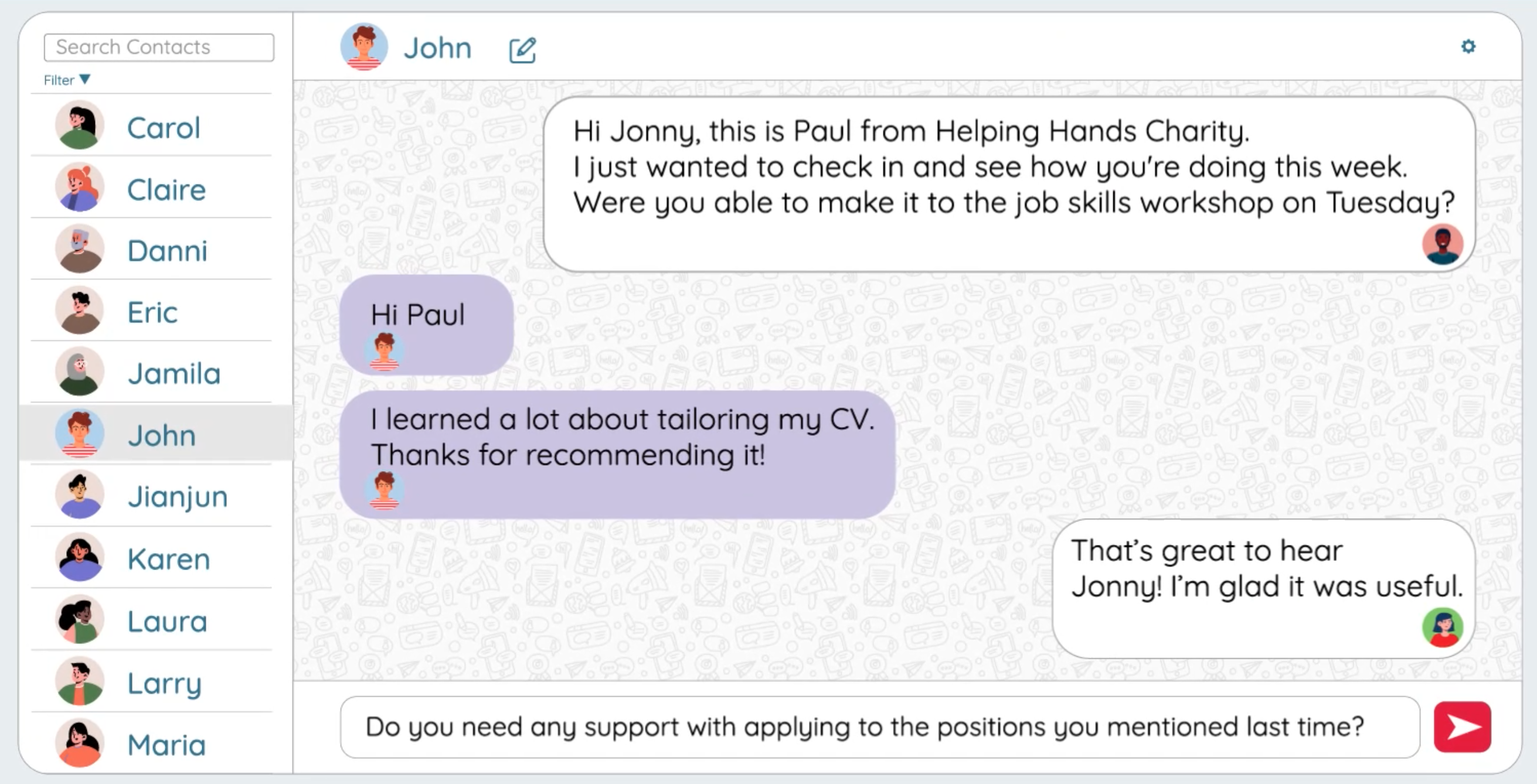
Send and receive SMS and emails from directly inside a person’s profile. Communicate 1-to-1 or in bulk. Set up automatic messages or schedule them in for the future. Everything’s logged, so nothing slips through the cracks.
Produce reports instantly with charts that are available out-of-the-box. Use Filters to finetune results when reporting on specific projects, demographic characteristics or other attributes. Every result is downloadable.
Learn from others' mistakes and benefit from practical, crowdsourced strategies that help you achieve this toolkit's outcomes.
Getting Started Create your Project (e.g. "Youth Mentoring Programme" or "Throughcare Service") Import the Impact Framework from this toolkit Set up your Co...
The Problem with Reoffending Rates Alone Funders and commissioners often focus on a single question: "Did they reoffend?" But this misses almost everything t...
Who You're Working With The majority of justice-involved young people have experienced significant trauma. Forms, questionnaires and formal assessments can f...
Realistic Response Rates 6-month follow-up: 40–50% is good12-month follow-up: 25–35% is realistic Many young people who don't respond are doing well and have...
The Argument Voluntary sector organisations can do things statutory services cannot: build genuine voluntary relationships built on trust; stick with young p...
Measuring your impact is only half the battle. To help you improve your results, every Toolkit™ comes with an integrated Impact Playbook.
Access a library of proven practical strategies designed to help you achieve these outcomes. Find examples of what's worked in other organisations and stay up-to-date on best practice.
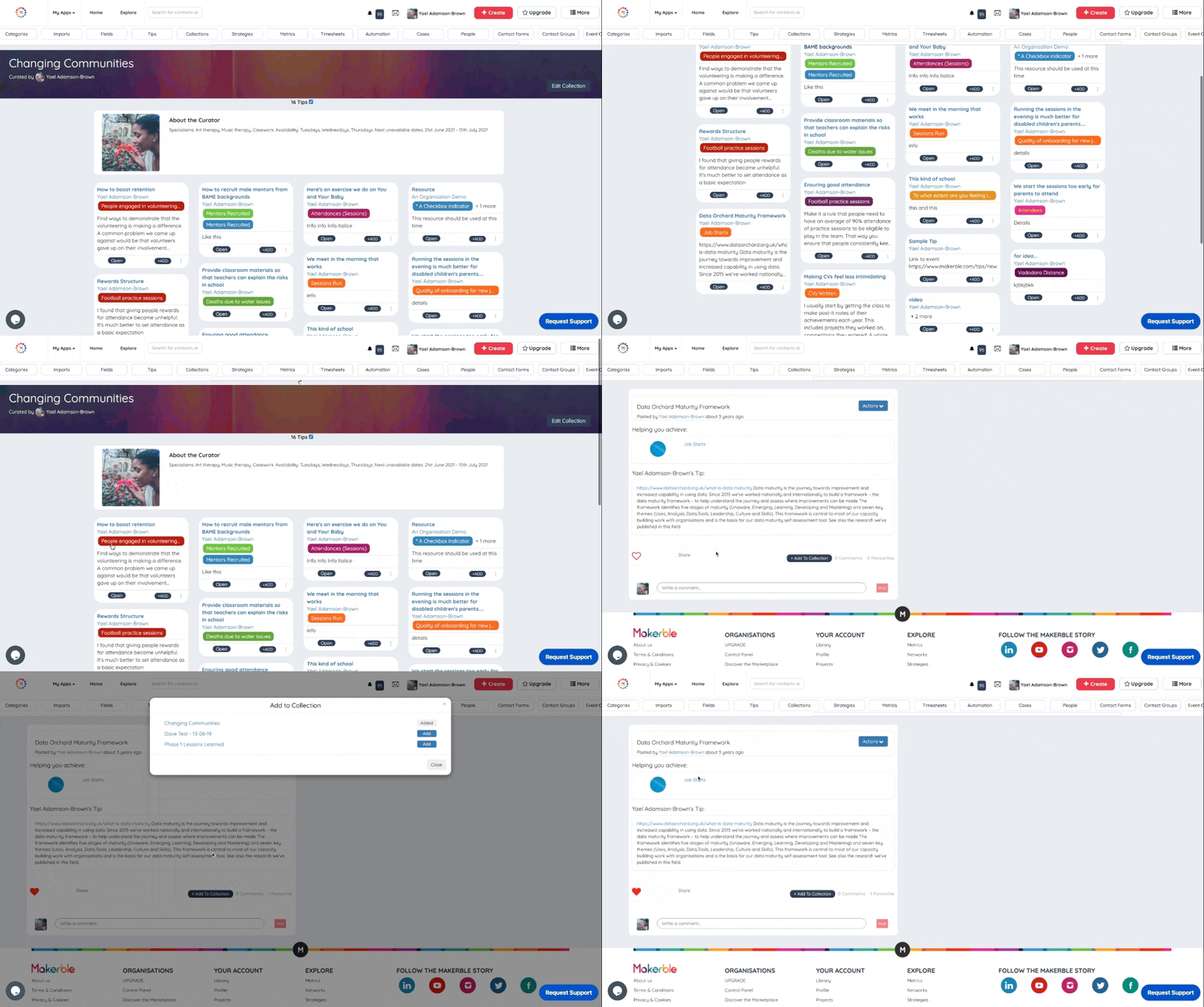
Cultivate curiosity, knowledge-sharing and openness to new ideas across your team. Your colleagues can share their own suggestions, improvements and reflections that are tagged to specific outcomes.
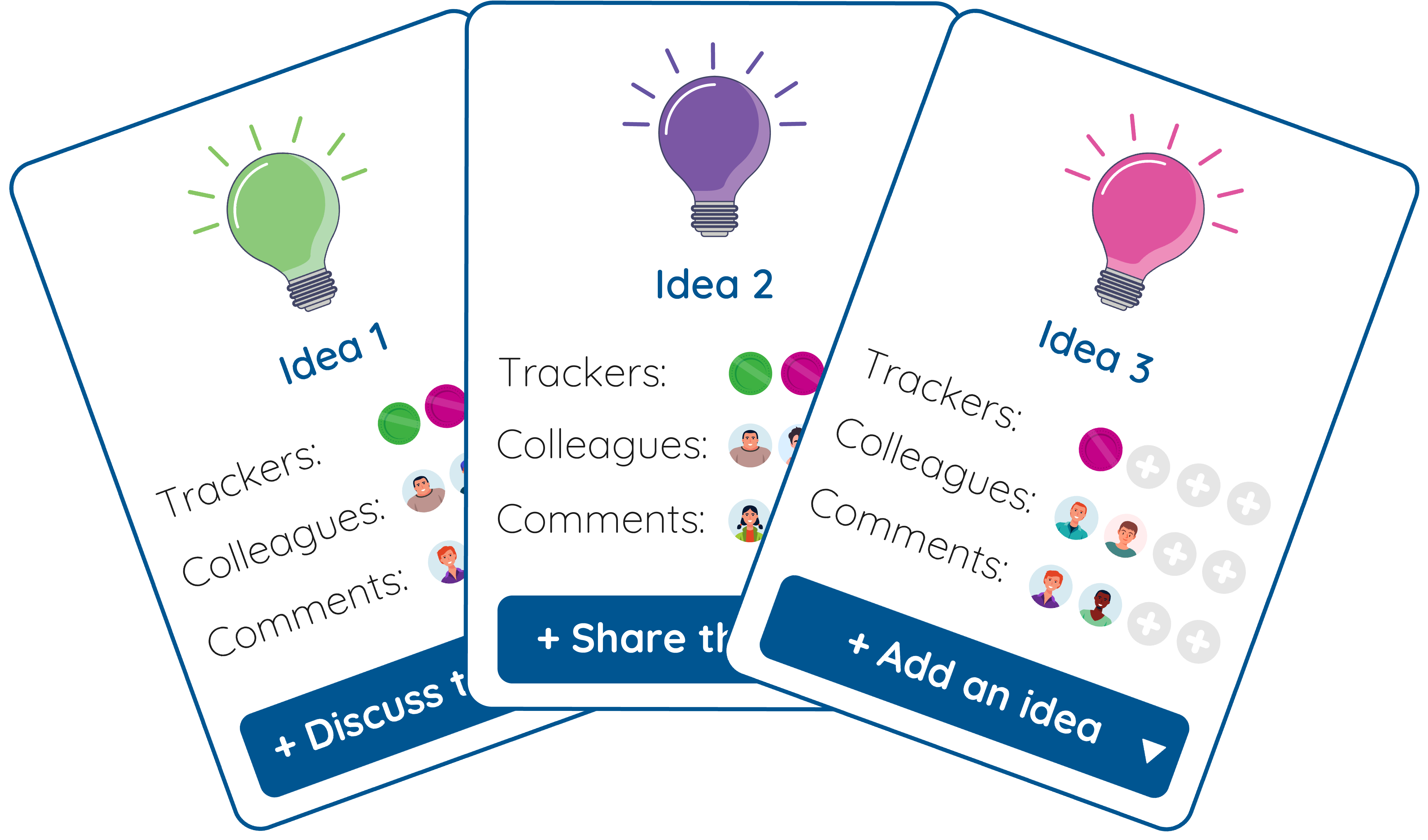
Provide colleagues with timely relevant guidance that's specific to each contact, client or beneficiary they're working with. Ideas are tagged with demographic characteristics and specific outcomes or indicators - which means that your colleagues will only see suggestions that are suitable for the person they're working with.
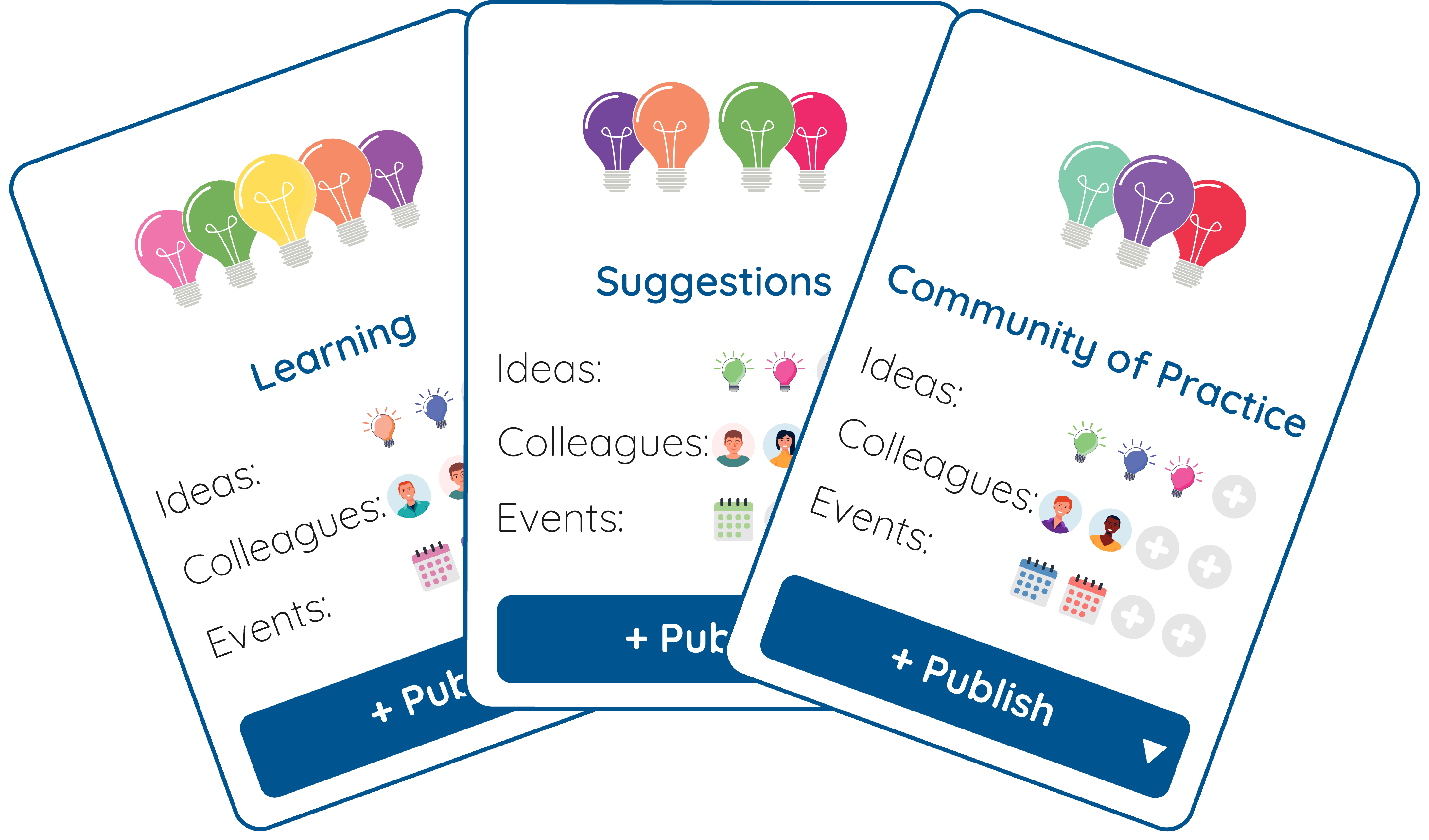
Curate ideas into Collections that are themed around particular topics or ways of working. Pick from the public library as well as ideas contributed by your team based on their own expertise or lived experience.
Work with our library of metrics or create your own
Behaviour
 Metric
 Metric
 Metric
 Metric
 Metric
 Metric
 Metric
Report results in an instant. Spot gaps quickly and make data-driven decisions based on live information.
Track impact using stories, surveys, imported spreadsheets or API integrations. Keep everything in one place - numbers, narratives, media and more.
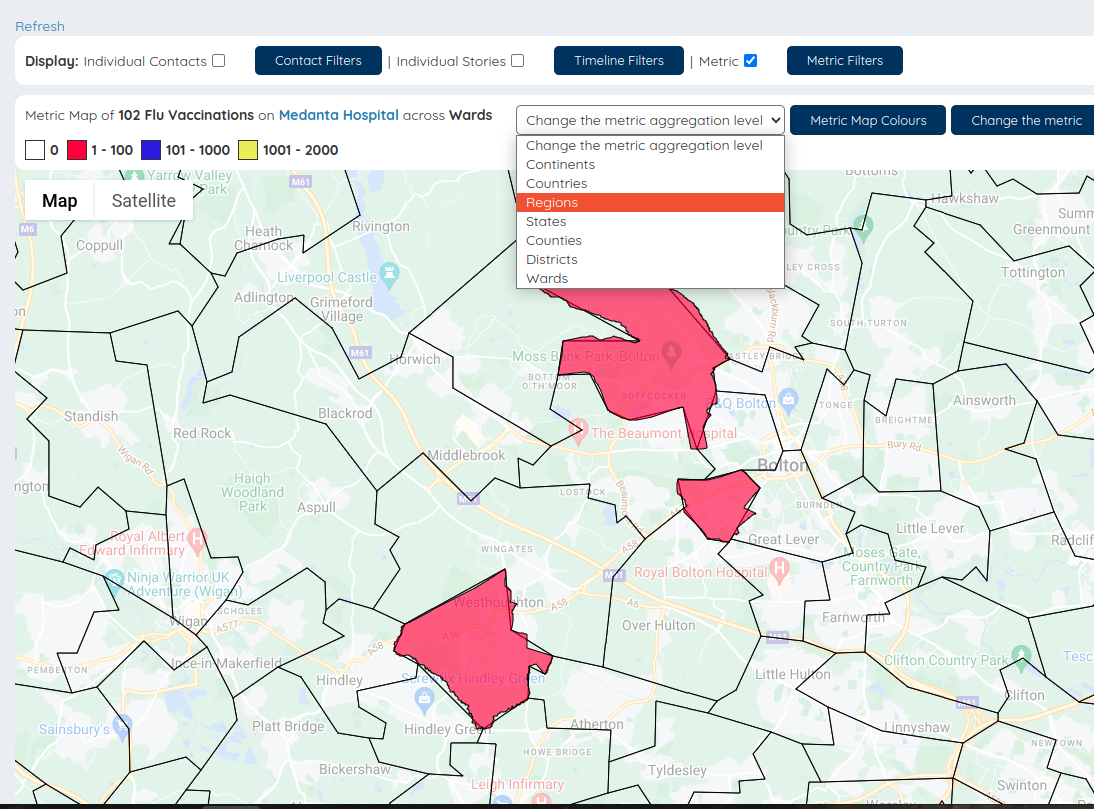
Plot your impact on a map - from heatmaps showing aggregated change to location pins on individual stories and projects. A powerful way to see gaps, strengths and reach.
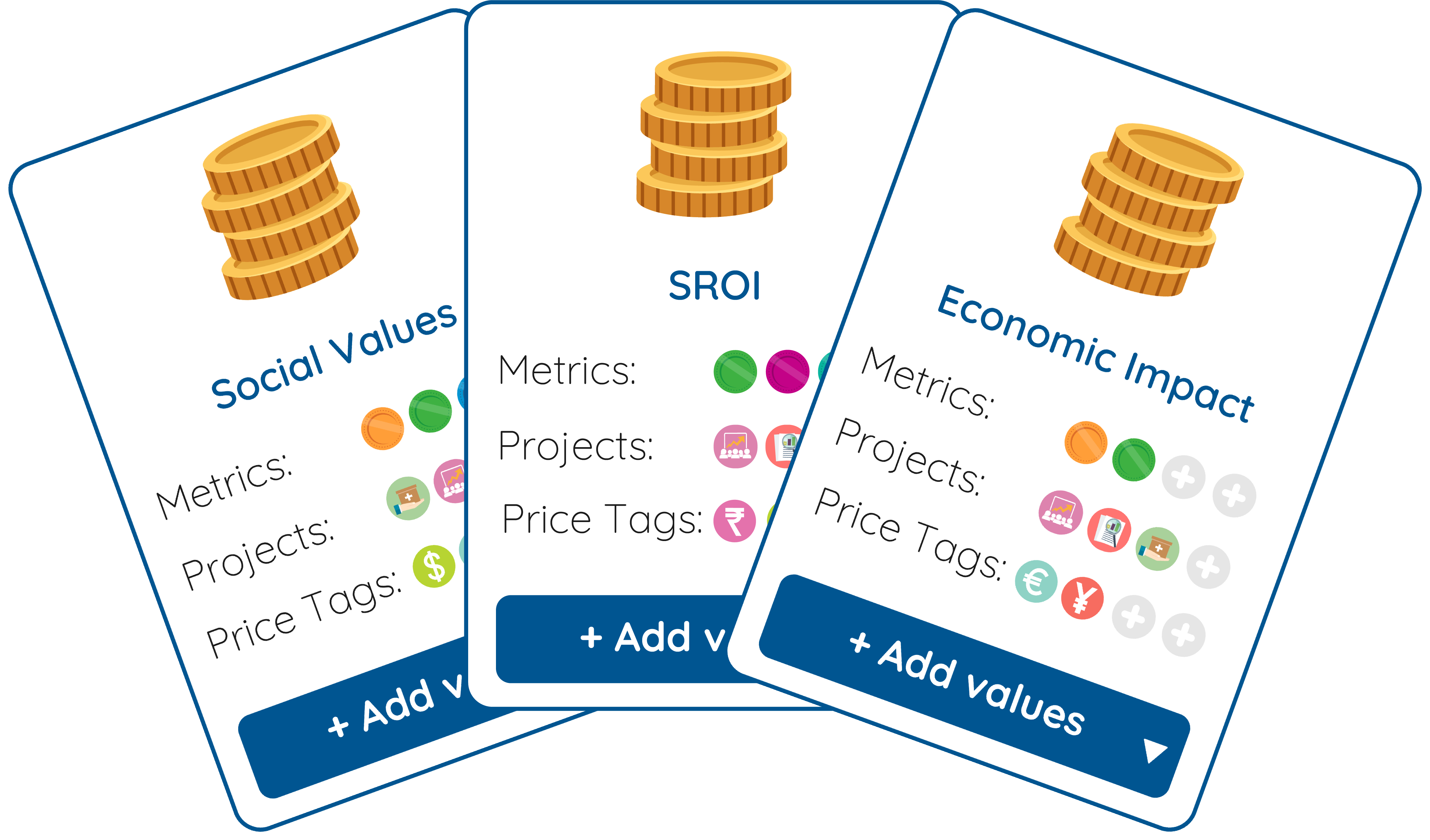
Define your own multipliers, proxies and financial values. Makerble® automatically calculates the Social Value, SROI or Economic Impact of the outcomes you’re delivering based on the numbers you enter. No third-party subscription needed.
Record impact stats and stories directly. Pull in results from spreadsheets, forms or other tools. Connect to to other systems for seamless continuity using APIs and integrations.
Stay organised with a helpful set of shortcuts that put everything you need just one click away


This collection is paired with the Youth Justice Support Toolbar™ but you can swap it for a different toolbar or add, remove and rename its shortcuts.
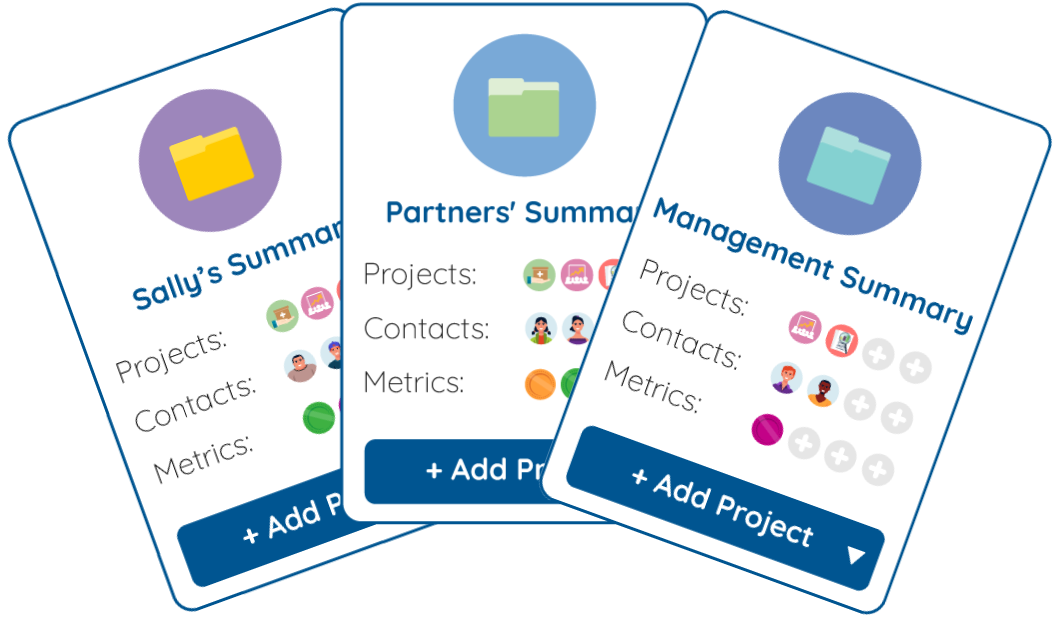
Organise your impact the way you want to. Use Projects to keep things separate, then group results together with an Album.
Powerful enough for reporting. Simple enough for day-to-day. Projects are the container for each cohort, service or programme you manage. Each project houses a set of contacts (e.g. people attending the same training course) as well as all the related case notes, survey responses and event records.
Meet every reporting requirement. Albums combine results from several projects. (And each project can be part of as many albums as necessary.) Now you can summarise and segment your work in every way you need to, whether for a funder, partner, manager or stakeholder.
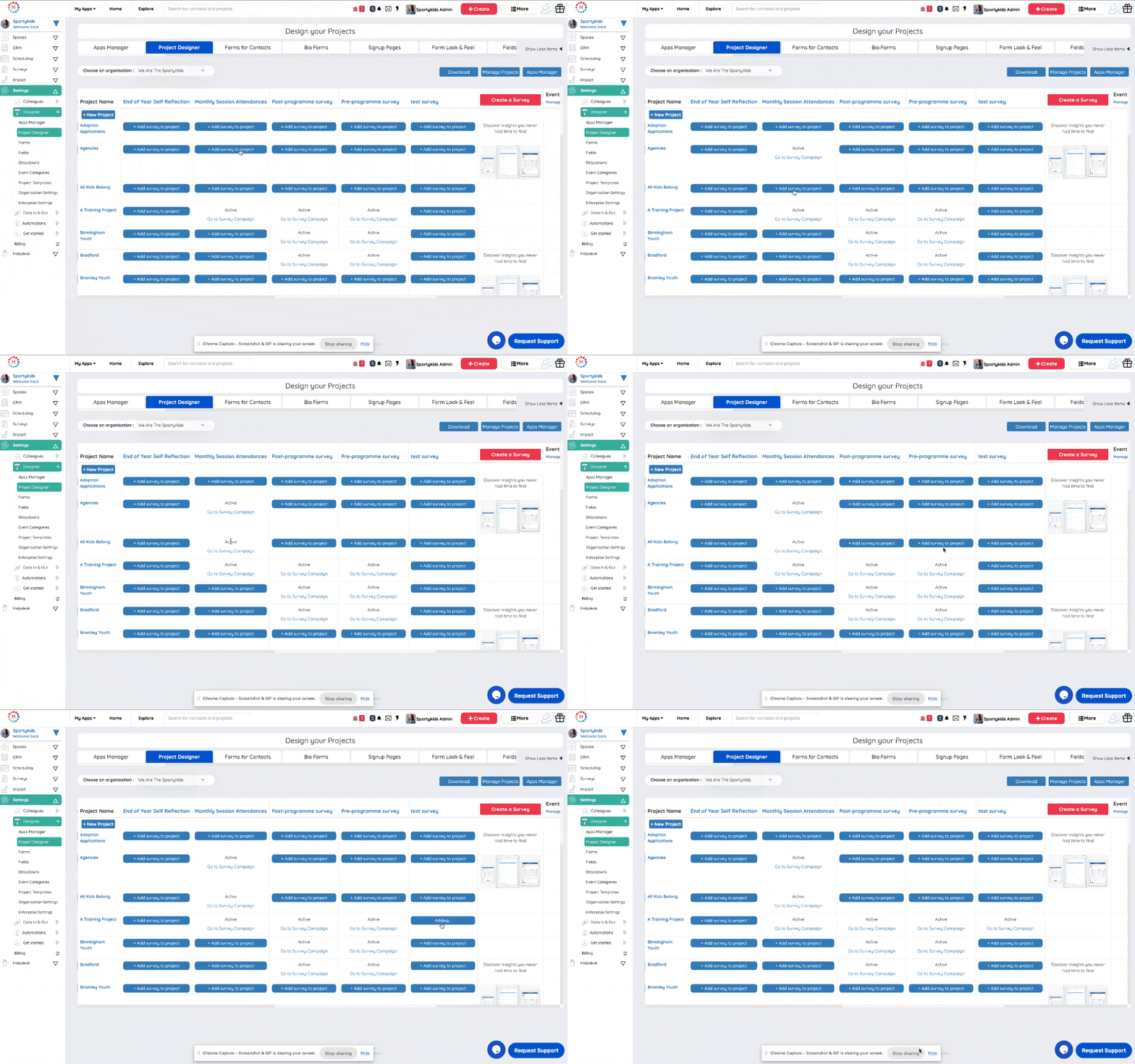
Customise your Toolbar™ to suit your needs. Add, move and rename Apps as you see fit. It’s your platform, make it your own.

Customise your system yourself at any time. Create new tools, surveys and forms using easy-to-use editors and assign them to the projects that need them. With Makerble, you're always in control with a platform that's future-proof.
Disability charities, Short Breaks and respite services, inclusive youth clubs, therapy providers (OT, SALT, physio), SEND and Portage services, transition teams and parent carer support organisations working with disabled children and young people aged 0–25.
The toolkit measures the full arc of change: from the quality of the mentoring relationship and initial engagement, through safety, stability and early motivation, through identity change and positive relationships, to reduced offending, sustained EET, and independent futures. It is built around Desistance Theory, the evidence that identity shift, meaningful relationships, and hope are the core drivers of lasting change.
Proven reoffending data can take 12–24 months to emerge. Research into desistance consistently shows that the shift in how a young person sees themselves, their sense of identity, their hope for the future, and their belief that change is possible, is a stronger predictor of sustained desistance than compliance with any order. This toolkit measures both justice outcomes and the underlying identity indicators that predict them.
Never hand a form to a young person at first contact. Build the relationship first. All surveys in this toolkit are designed to be completed conversationally. The worker goes through the questions together with the young person and enters the responses. Use Distance Travelled charts to show young people their own progress; it is a powerful motivational tool.
Justice-involved young people are harder to follow up than most groups. A 40–50% response rate at 6 months is good; 25–35% at 12 months is realistic. Keep follow-up relational, not clinical. Report non-response honestly and supplement with YOT data where available.
Speak to one of our friendly experts or customise your platform yourself.
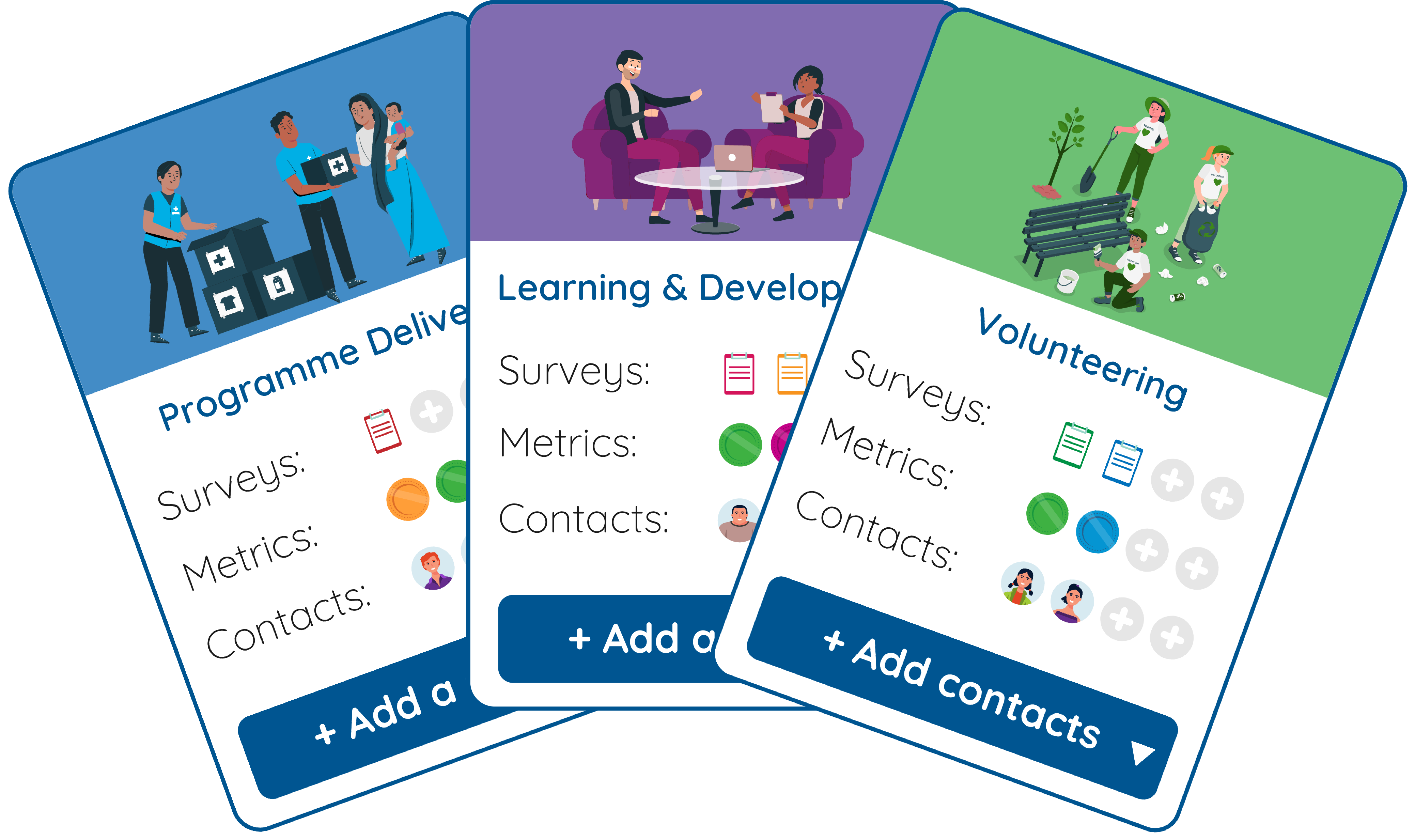
Your projects are the way you connect related information: results, contacts, survey responses, events and more.